
How Shakira Became the Face of the World Cup and What Your Brand Can Learn From It

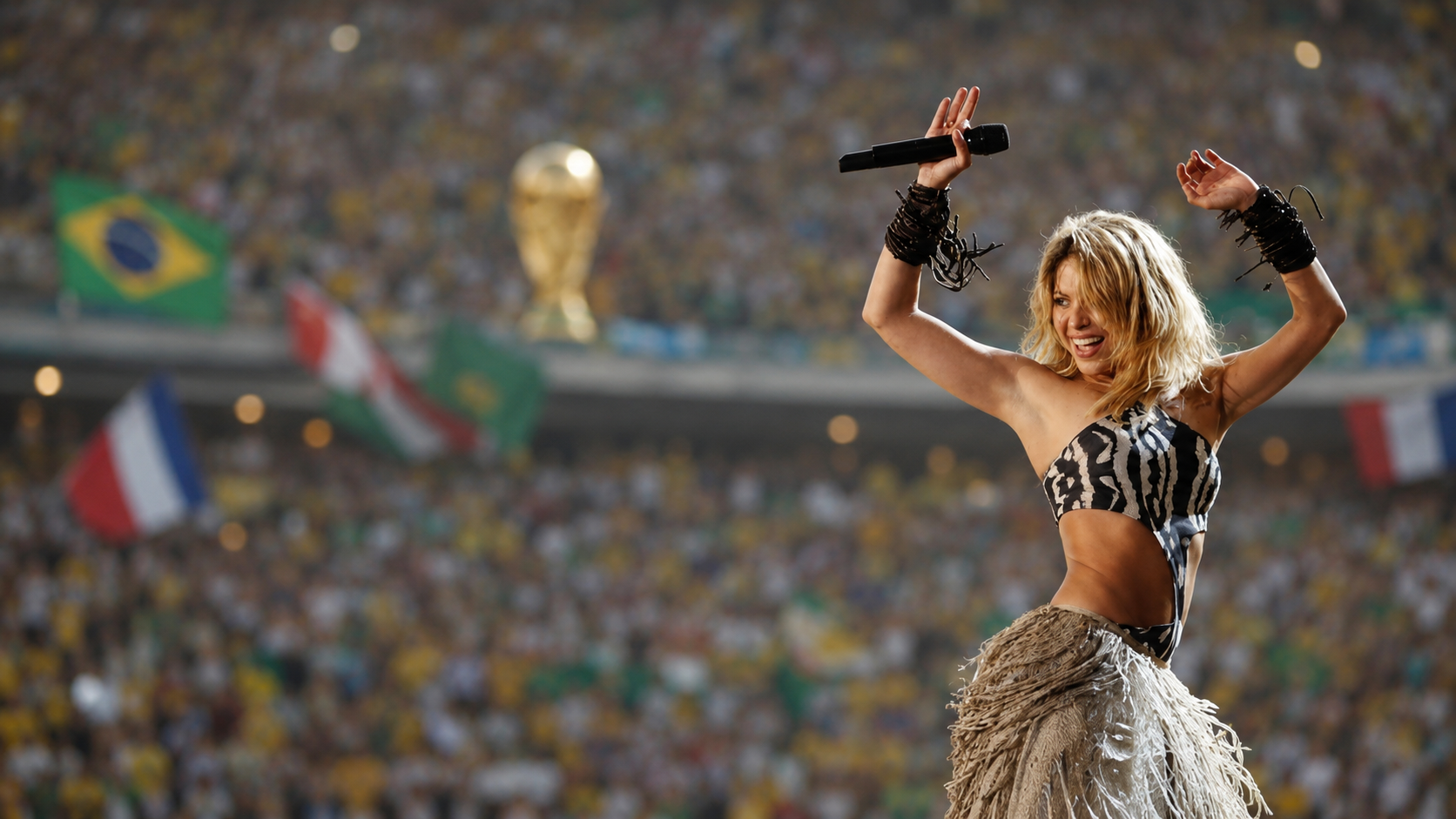
Every four years, without a relaunch campaign, without a press release and without anyone asking for it, Waka Waka starts playing everywhere. In stadiums, in airports, on television screens and across the feeds of millions of people who were not looking for Shakira but suddenly find her in their heads.
That is not luck. It is one of the most effective music branding strategies ever executed: the ownership of a cultural moment. And with the release of Dai Dai as the official song of the 2026 FIFA World Cup alongside Burna Boy, Shakira has reactivated that mechanism with a precision that very few artists, and very few brands, have ever managed to replicate.
This article breaks down how she did it, why it works and what your business can take from this strategy.
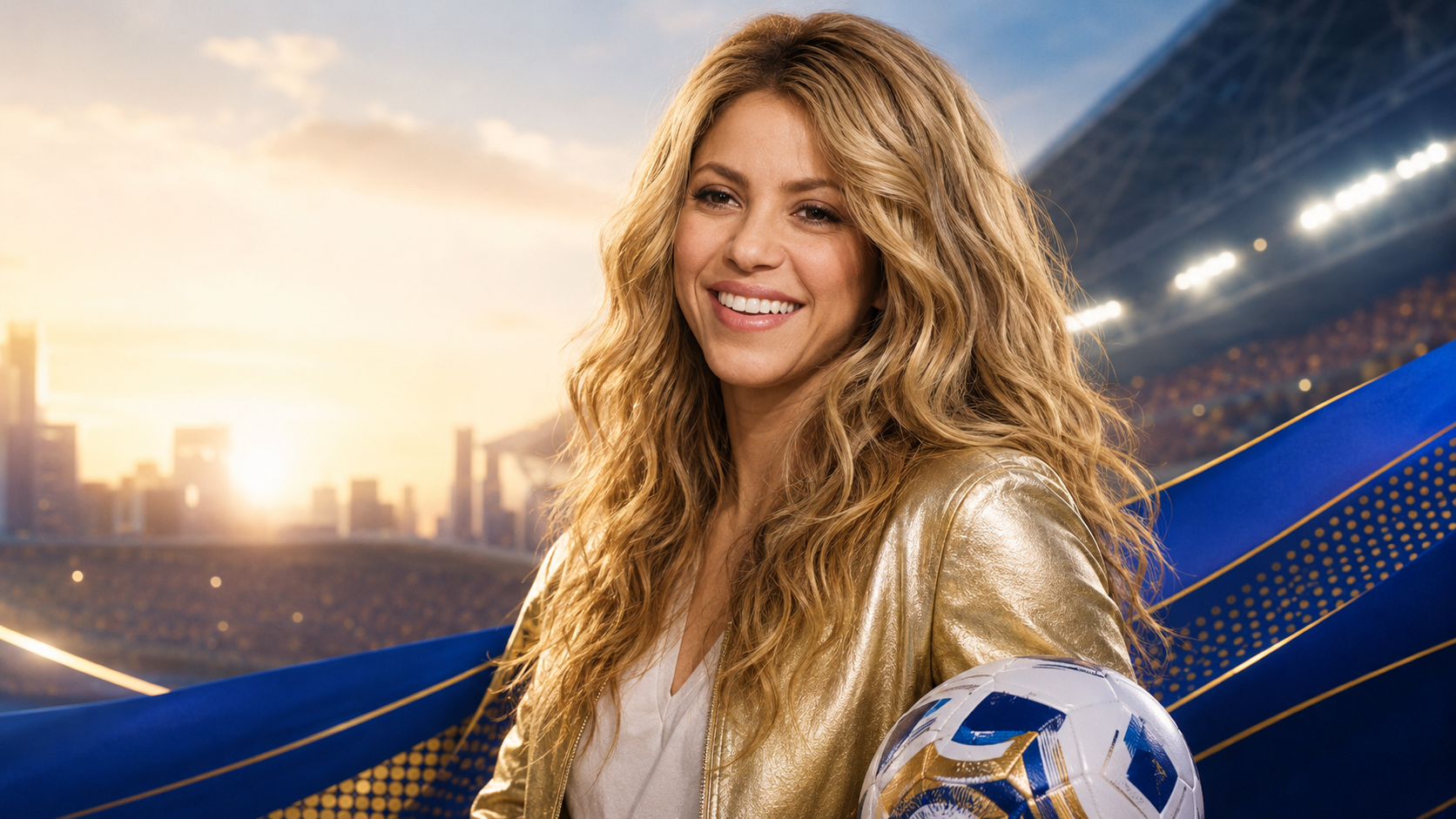
Shakira Did Not Join the World Cup: The World Cup Joined Her
In 2010, FIFA was looking for an artist to perform the official song of the South Africa World Cup. Shakira was already a global star, but what happened after that event transformed her career in a way that no conventional marketing strategy could have planned.
Waka Waka was not just a hit. It became the most-streamed World Cup song in history, with over 4.3 billion YouTube views and more than one billion Spotify streams. But the most valuable outcome was not the immediate play count. It was what happened in every tournament that followed.
In 2014, 2018 and 2022, Waka Waka resurged organically. No campaign. No investment. Just because the song was so deeply associated with the event that audiences activated it themselves. Shakira had stopped being the artist who sang at the World Cup. She had become the artist of the World Cup.
From Waka Waka to Dai Dai: The Branding Behind Each Appearance
On May 14, 2026, Shakira released Dai Dai alongside Burna Boy as the official song of the 2026 FIFA World Cup, taking place across the United States, Canada and Mexico from June 11 to July 19. She was also confirmed as a co-headliner of the first halftime show in World Cup history, alongside Madonna and BTS.
What makes this second appearance notable is not simply that she came back, it is how she came back. Dai Dai blends Afrobeats, dance pop and reggaeton, with lyrics delivered in English, Spanish, Italian, French and Japanese. It is a song designed to be global from its structure, not as a translation of something that already existed.
That is exactly what Waka Waka did in 2010: it fused a Cameroonian chant with Western pop production and lyrics in both English and Spanish. In both cases, the decision to create something multicultural and multilingual was not accidental. It is a branding decision that amplifies reach without losing image coherence. Want to understand how to apply these principles to your own brand? Read our full guide on brand positioning.
What Waka Waka and Dai Dai share as branding pieces:
- Multilingualism: Both songs speak in more than one language to reach broader audiences without losing identity.
- Collective emotion: Both are built around aspiration, effort and celebration, emotions that transcend cultures.
- Connection to the host culture: Waka Waka incorporated African sounds; Dai Dai incorporates Afrobeats through Burna Boy.
- Scalability: Both work in a stadium, on a television screen and on a mobile device without losing impact.
The Mariah Carey Effect: How an Artist Owns a Cultural Moment
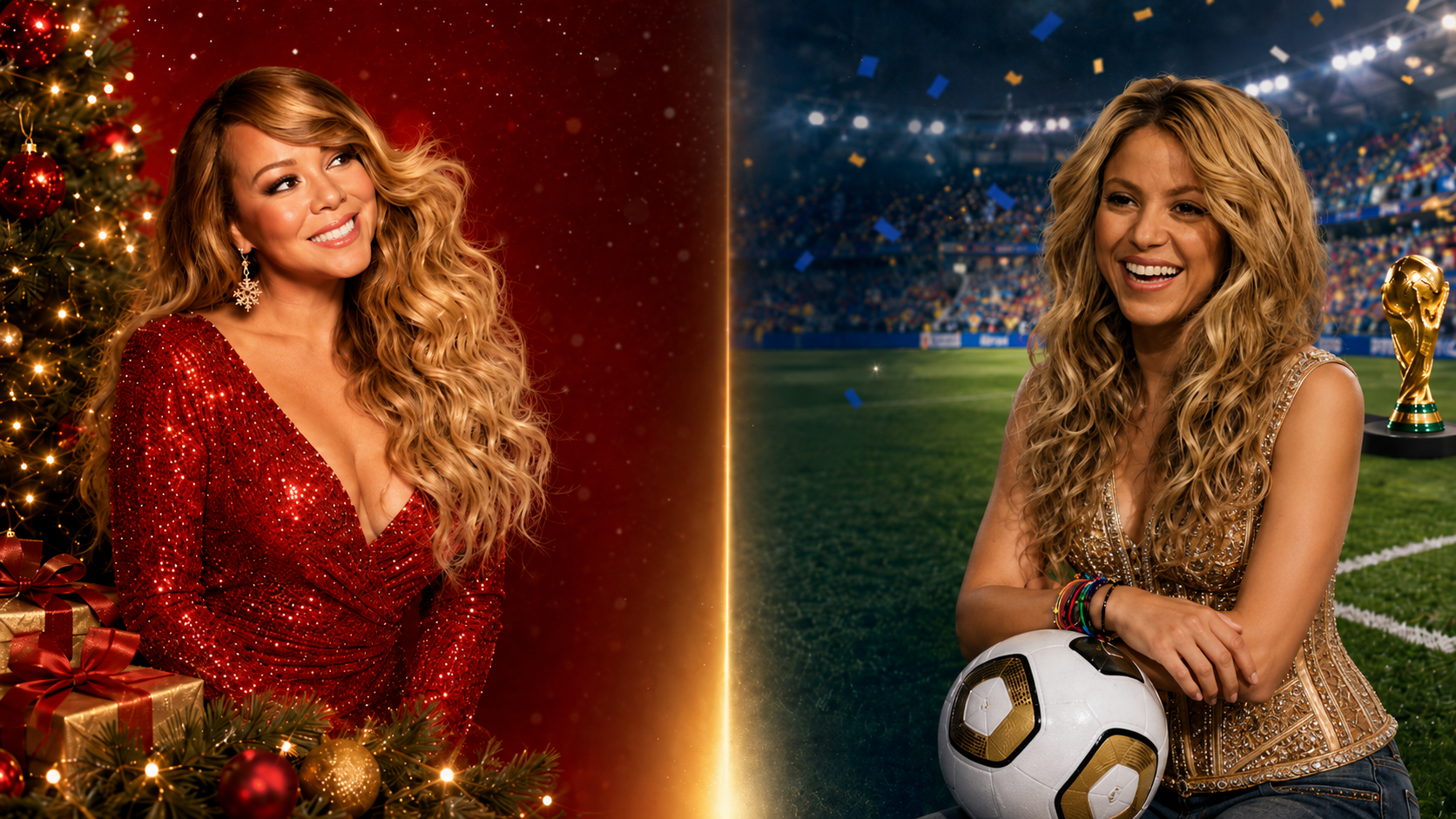
Shakira is not the only one who has pulled this off. Mariah Carey did something similar, though at a much higher frequency, with Christmas. All I Want for Christmas Is You was released in 1994, and today, more than thirty years later, it tops global charts every December without any active campaign on her part.
The comparison is not coincidental. Both strategies share the same underlying logic: associating a personal brand, in this case, an artist's to an emotional moment so powerful that the association becomes automatic in the audience's mind.
The difference between the two strategies is one of frequency, not principle. Mariah has annual activation; Shakira has quadrennial activation. But the mechanism is identical: creating a piece of content so well anchored to a cultural moment that it does not need to be relaunched, because the event itself relaunches it.
The Four Branding Principles Behind a Strategy That Works Every Four Years
Reducing Shakira's strategy to luck or fame would be a mistake. There are four specific principles that explain why her music branding functions as a long-term asset rather than a single-cycle campaign.
Consistency of values, not of content
Shakira did not repeat Waka Waka. She made Dai Dai, a different song, a different collaborator, a different musical context. But the image she projects is the same: energy, cultural diversity, celebration and human connection. The consistency lives in the brand's values, not in the format of the product.
Choosing a high-scale emotional territory
Football is not a sport. It is an emotional experience that unites more than four billion people around the world. Associating your brand with that territory is categorically different from associating it with a trend or a season. It is anchoring it to something with a guaranteed cycle of recurrence and global scale.
Content designed to last, not to go viral
Waka Waka was not designed to be the meme of the moment. It was designed to accompany a historic event and to withstand the test of time. That is a production and intention decision that very few brands make consciously. Most chase immediate virality instead of durable recall.
Impeccable timing within the event cycle
Shakira does not arrive at the World Cup at the last minute. She arrives early enough for the song to build momentum before the event begins. Dai Dai was released on May 14, nearly a month before the tournament starts on June 11. That is not an operational detail, it is a strategic branding decision.
What Your Brand Can Learn From Shakira's Playbook
Your brand does not need to be a global artist to apply these principles. What Shakira did with the World Cup, any business can attempt with the cultural moment, recurring event or emotional territory that is most relevant to its industry and its audience.
- Identify your territory. Is there a recurring event, date, theme or emotion that is meaningful to your audience? It could be an industry conference, a seasonal ritual, a cultural conversation that repeats itself or a community moment your brand could own.
- Create content built to last. Instead of producing content that chases immediate virality, invest in pieces that can reactivate themselves when the moment comes back around.
- Be consistent in values, flexible in format. Shakira did not repeat the same song, she repeated the same values. Your brand can evolve its formats and platforms without losing the coherence of what it stands for.
- Arrive before the moment arrives. Timing is everything. A brand that shows up when the moment is already at its peak is already too late. Real positioning happens in anticipation, not in reaction.
Shakira World Cup 2026: The Branding Lesson Football Has Been Teaching for Fifteen Years
Shakira is not just an artist. She is a live case study in how to build a brand that reactivates on its own, generates conversation without paid advertising and strengthens its global position every time the event it is anchored to comes back around.
With Dai Dai and the 2026 World Cup, that cycle activates again. And the question any brand should be asking while watching it is not how to imitate Shakira, but what cultural moment could be for their business what the World Cup is for her.
Does your brand have a territory it can own?
At Hiweb, we help you build a branding strategy that generates real recall, not just visibility. With intention, data and creativity.
.png)
.jpg)
