Rebranding Marketing Strategy: From the Sabrina Carpenter Playbook to Your Brand


For almost a decade, Sabrina Carpenter released music, went on tour, and built a fanbase. The talent was never the question. But if you asked someone in 2021 what made her different, nobody could answer in one word. There was no thread. No identity that felt completely and unmistakably hers.
What changed was not her voice or her personality. It was the way she started showing up: with an aesthetic built with intention, repeated across every piece of content, every collaboration, every performance, until it stopped feeling like a strategy and started feeling like simply her. That is exactly what separates the brands people remember from the ones they forget.
In this article we use Sabrina Carpenter's case as the starting point to break down what a real rebranding marketing strategy looks like, when your brand needs one, and what separates the ones that work from the ones that destroy everything they built.
%20(2)%20(1).jpg)
What is a rebranding marketing strategy and why it doesn't start with the logo
Rebranding is the process of redefining how a brand is perceived: its narrative, its visual identity, its tone of communication, and its positioning with its audience. But the part that is most misunderstood is that it does not start with the designer. It starts with a question: What do you want people to feel when they see your brand?
Sabrina Carpenter did not rebrand the day she changed her aesthetic. She rebranded when she decided what story she wanted to tell: Hollywood, humor, romance, unapologetic femininity. Baby blue as her own color in a market where Taylor had pink and Charli had green. 1960s corsets, cinematic references, consistent attitude in every interview, every reel, and every album cover. Everything pointing in the same direction.
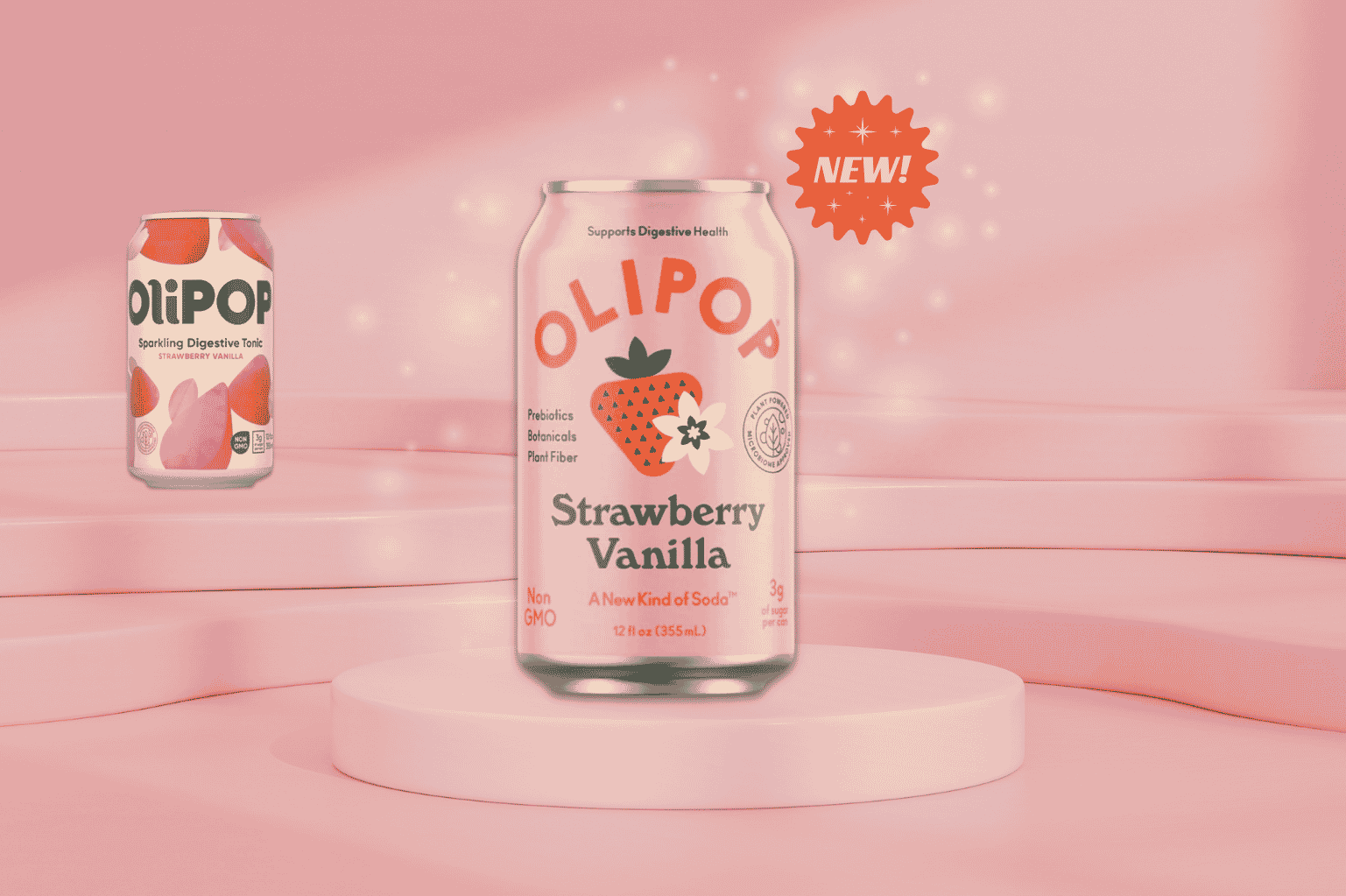
And when every piece of content says the same thing without saying it explicitly, that is real brand identity. Product brands do exactly the same thing: Olipop stopped being a digestive tonic and became a new kind of soda, and that changed everything. It did not change its formula, it changed its story.
Signs your brand needs a rebranding
Not every brand needs a rebranding right now. But there are signals worth paying attention to:
Your audience evolved and your brand stayed behind
Tous had spent decades being synonymous with its little bear. It was recognizable and loved, but completely associated with a generation that was no longer its primary customer. In 2022 they made the hardest decision in the brand's history: removing the symbol that had defined them for thirty years to speak to a younger audience. They closed that year with 450 million euros in revenue and 60% growth in profits. Not because the bear was wrong, but because it was no longer the right bridge to the people they wanted to reach.
Your brand no longer stands out from competitors
Swarovski was luxury crystal. For decades that worked. But as younger buyers began associating the brand with something too formal for their everyday lives, the gap between what Swarovski meant and what its new audience wanted became impossible to ignore. Their rebrand toward accessible pop luxury was not a cosmetic decision. It was a strategic response to that disconnect.
Your digital presence no longer represents who you are
A website that feels five years old, social profiles with no visual consistency, a communication tone that does not connect with who you are today. In the digital space, perception is almost everything. If someone searches for you and what they find does not inspire confidence, that opportunity is already gone.
Your business went through a significant change
New services, new market, full repositioning. When the business changes on the inside but the brand stays the same on the outside, it creates a disconnect that confuses customers and slows growth.

What successful rebrandings have in common
There is one principle that repeats across every case that works, in artists as much as in product brands: they built an identity of their own and repeated it with intention until it became unmistakably theirs. The difference between reinventing yourself and losing yourself is having that thread.
Sabrina Carpenter spent nearly a decade finding hers, but once she found it she executed without hesitation: every song, every video, every collaboration with Skims or her fragrance line reinforced the same narrative. Fans around the world started sharing not just her music but her personality, her humor, and her confidence. That does not happen by accident.
Charli XCX understood the same principle with Brat in 2024: she chose a lime green no one had claimed, a deliberately blurry typeface, and a concept so clear it became a cultural movement. Searches for 'brat green' grew over 500% on Google that summer. Tate McRae made a similar move from the opposite direction: she gradually transformed from sad girl ballads to a high-energy pop performer. Zara Larsson turned a dolphin meme into the foundation of a complete rebrand: she embraced the rainbow dolphins, built a summer aesthetic around them, and used that as the visual universe for Midnight Sun, which earned her first Grammy nomination.
Learn more about our branding service and see how we build identities that hold across every channel.
.png)
What Jaguar and GAP teach us about what not to do
The principle that unites every successful case also explains the failures. Jaguar deleted its entire social media presence in November 2024, launched a campaign with no cars in sight, and adopted a visual language completely disconnected from 102 years of brand heritage. They did not prepare the market, did not show the product, and broke the only thread their audience had with them. The result was a 97.5% sales collapse in Europe by April 2025.
GAP made a similar mistake but more quietly: in 2010 they changed their logo with no context, no narrative, and no preparation. The reaction was so negative they reversed the change in less than a week. What both cases share is that they confused a visual change with a strategy. They changed the look but broke the thread.
.jpg)
The pillars of a rebranding strategy that actually works
What works for artists like Sabrina Carpenter works exactly the same way for any business. Coherence is not a luxury reserved for big brands. It is a decision any company can make today. These are the pillars that cannot be skipped:
Coherent visual and verbal identity
Writing tone, colors, typography, the way you speak on social media. Everything needs to tell the same story at every touchpoint. You do not need to reinvent yourself completely. You need to know what thread you want to define you and repeat it with intention.
A website aligned with the new positioning
There is no point in refreshing your identity if your website still tells the old story. The site is often the first real point of contact between your brand and a potential customer, and it needs to reflect exactly who you are today.
SEO and content from the new narrative
A rebranding also means rethinking how people find you on Google. Keywords, service descriptions, blog content: everything needs to speak from the new identity and be optimized to reach the right audience.
Social media and paid campaigns with the new message
The change needs to reach your audience where they actually are. It is not about doing more, it is about doing it with identity. Every piece of content should say the same thing without saying it explicitly, exactly the way Sabrina did with every tour bodysuit, every brand collaboration, and every interview.
At Hiweb we build complete rebranding strategies: identity, web, SEO, content and conversion. Learn more about our branding service.
A rebranding marketing strategy works when there is a thread that holds it together
Rebranding is not for brands in crisis and it is not exclusive to large budgets. It is for any business that feels it is no longer communicating well with its audience and wants to do something about it with intention and a clear plan.
What Sabrina Carpenter, Charli XCX, Olipop, and Chobani have in common is not the budget or the size. It is that they found their thread and repeated it with coherence across every channel, every format, and every moment of contact with their audience. What Jaguar and GAP have in common is that they ignored it.
At Hiweb we approach rebranding as an integrated strategy that combines identity, digital marketing, website, content, and positioning so your brand does not just look better but communicates better and converts better.
Contact us to schedule your free digital audit, or text us on WhatsApp and tell us where your brand stands today.
.png)
.jpg)